


We’re turning our attention to several items that have been collecting dust on our ‘to do’ list, in addition to adding to the 2026 events calendar on a weekly basis thanks to your submissions.
It’s been a while since we’ve ‘proverbially’ put pen to paper and knocked out a proper NYC Moto feature.
So to ease our way back, and seeing how the current weather trend in the ‘Big Apple’ is keeping local two-wheel rides garaged, we’re turning our attention to several items that have been collecting dust on our ‘to do’ list, in addition to adding to the 2026 events calendar on a weekly basis thanks to your submissions.
The Distinguished Gentleman’s Ride is just a few months away, so we will soon be ramping up our pre-ride coverage, highlighted memories from former participants, organizers and sponsors as this year the event celebrates its 15th ‘Crystal’ Anniversary. We will also be putting out a call in the coming weeks for photographers, filmmakers and sidecar owners to raise the bar on our coverage from 2025. And we have a few special NYC DGR announcements in the wings. So, stay tuned. It’s going to be legendary.
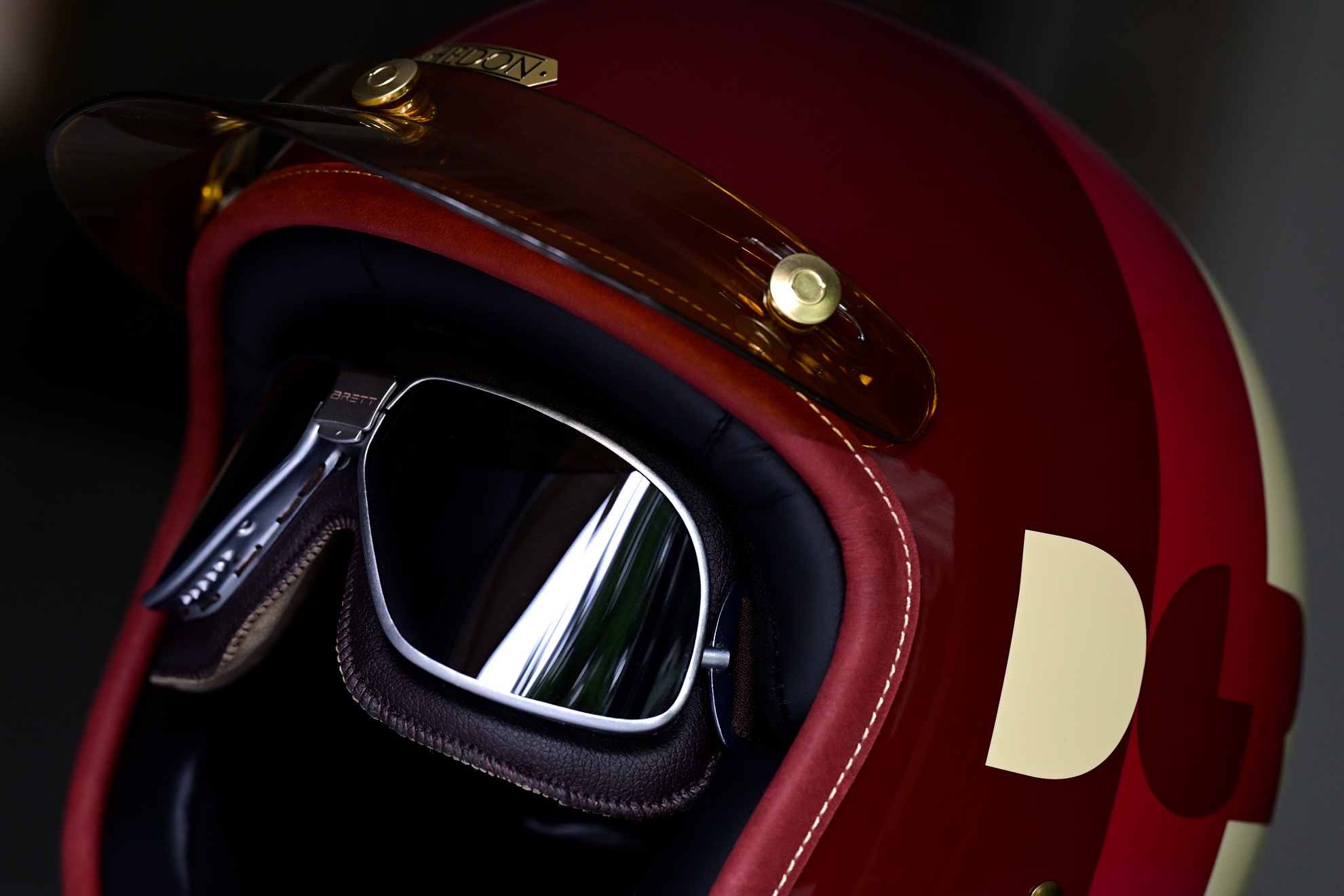
We recently received our 2025 DGR helmet from Hedon for what was a banner fundraising year; NYC Moto finished 3rd in the New York City standings and 36th globally last year thanks to the extreme generosity of our ride donors. We’ll save our review of the Hedon helmet – one that has been waiting in the wings since the company first came on the scene in 2011 and we were based in Los Angeles – for another day. Safe to say though, in the British retro helmet industry we’re firmly in the Davida Helmets camp in terms of styling, safety standards, comfort and fit.
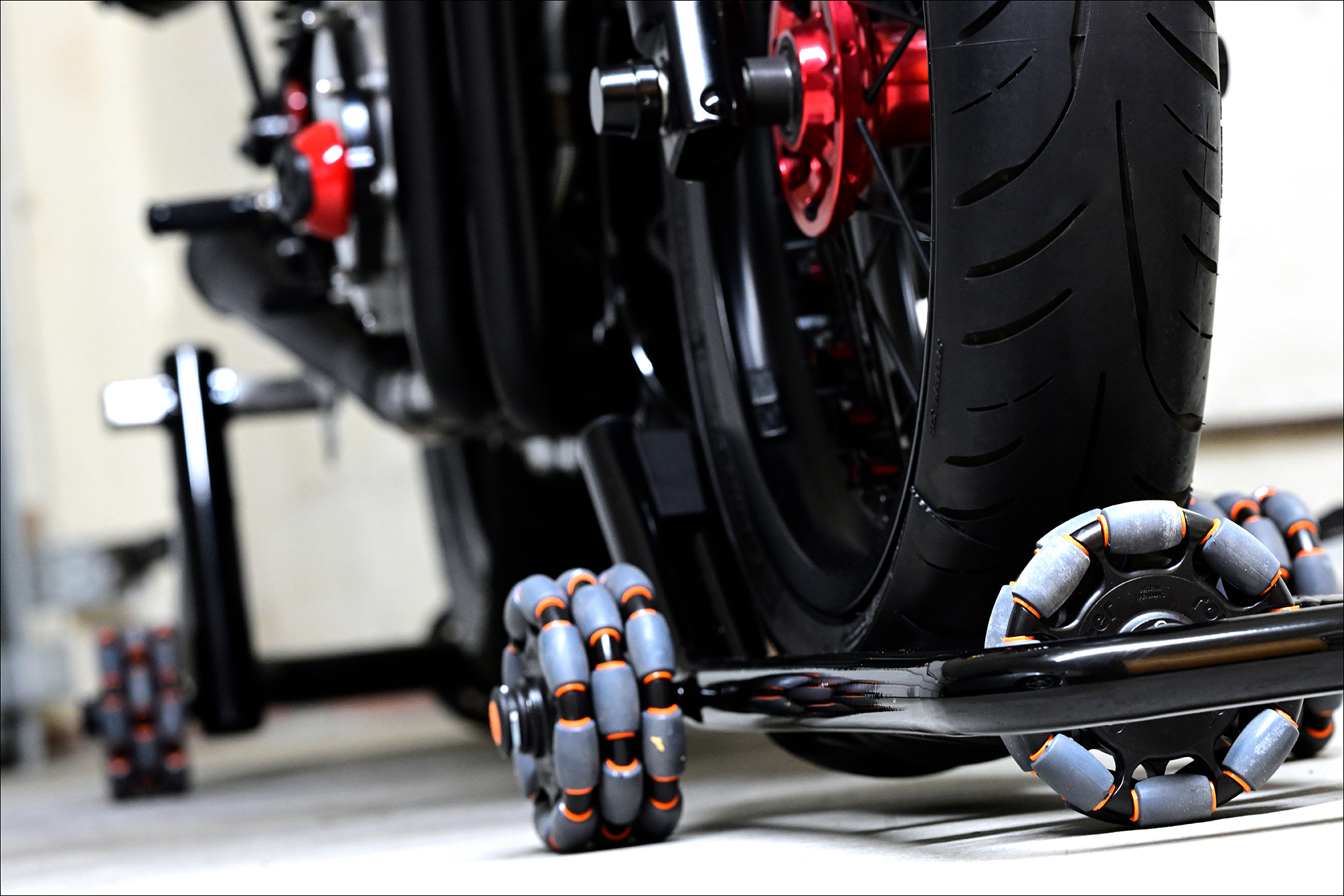
Keeping your bike on stands in the off season can help preserve the integrity of your tires and reduces the risk of flat spots, especially when the temperatures drop. — Rahoul Ghose
... having a bike with limited tech not only allows much of the work to be done in the home garage; it also allows for regular maintenance – oil and filter changes, brake fluid replacement and bleeding lines, chain cleaning and lubrication – to all be done by said home mechanic.
TECH TIME: BIKE SPECIFIC BUT THE TAKEWAYS ARE UNIVERSAL
So, let’s segue into that list and talk tech for a while …
Owning an older, though not quite vintage ride, comes with some unique issues even for a bike only 16 years old. Some are simple fixes while others require sage advice from other tinkerers with many more years of experience.
Our 2010 Thruxton 900 EFI has had more mods and upgrades than I care to admit. But having a bike with limited tech not only allows much of the work to be done in the home garage; it also allows for regular maintenance – oil and filter changes, brake fluid replacement and bleeding lines, chain cleaning and lubrication – to all be done by said home mechanic. A labor of love as they say.
Not to say we don’t hit a few potholes along the way. It wouldn't be NYC.
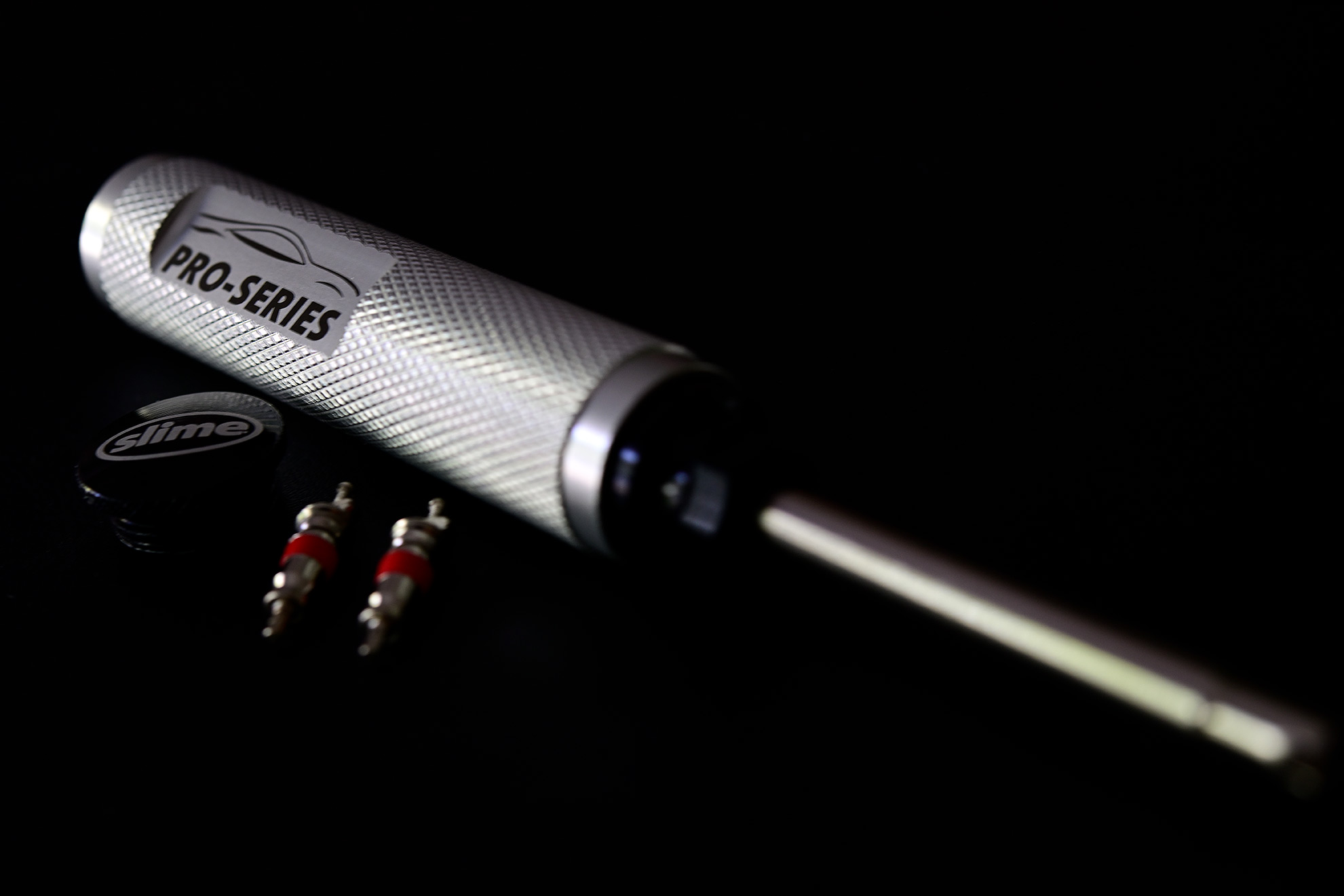
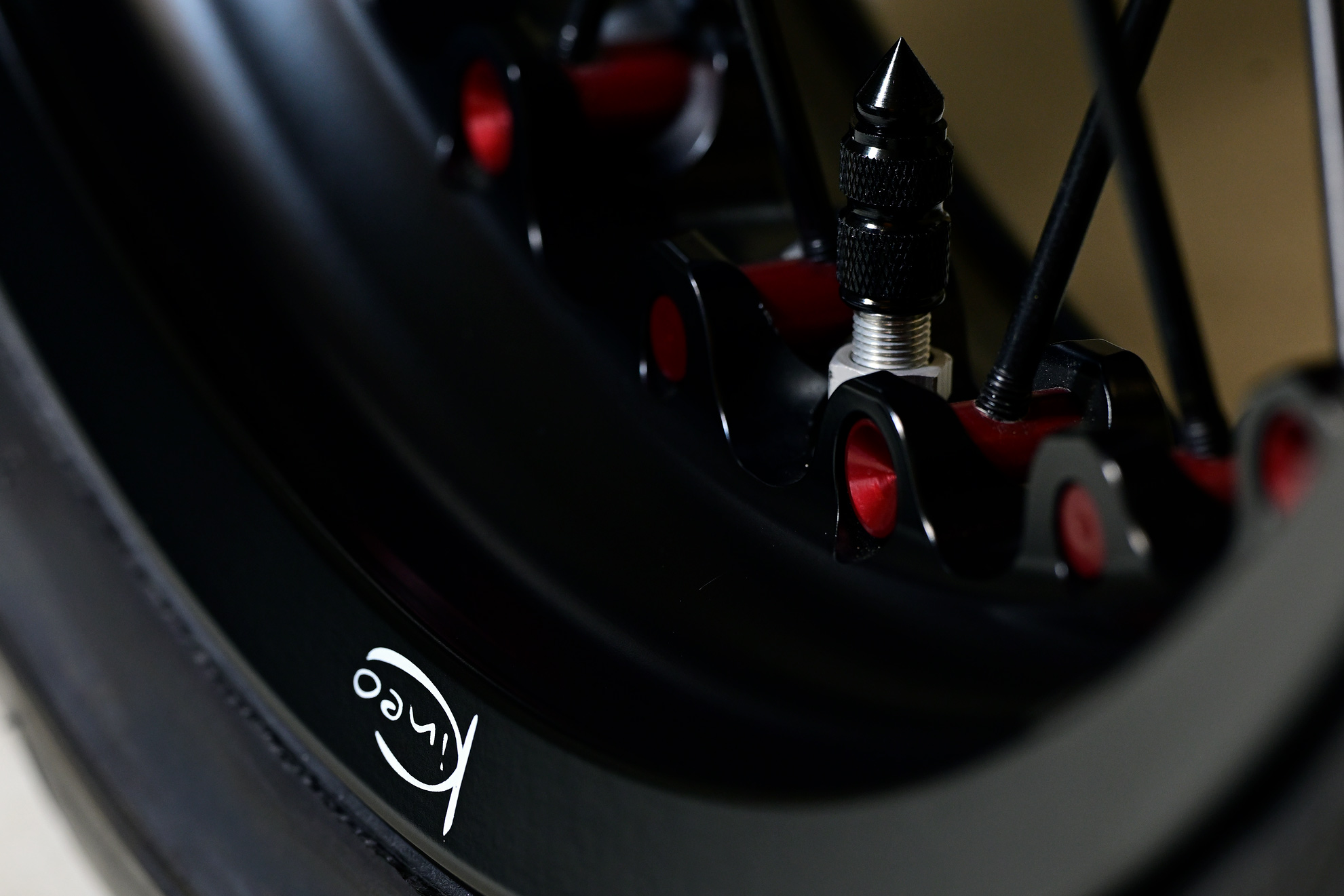
Checking all your bolts to make sure they are tightened down properly now extends to checking your valve stem cores, if you have a slight but consistent air pressure loss in your tires. — Rahoul Ghose
Tires tend to lose pressure in cold weather, typically dropping about 1 PSI (pound per square inch) for every 10°F decrease in temperature. This occurs as cold air contracts, taking up less space inside the tire.
TIRED OF BEING UNDER PRESSURE
Tire pressure or lack thereof was our first jolt this past winter. Tires tend to lose pressure in cold weather, typically dropping about 1 PSI (pound per square inch) for every 10°F decrease in temperature. This occurs as cold air contracts, taking up less space inside the tire.
Our Kineo tubeless spoked rims do tend to drop a little pressure over time, especially when the temps drop. But I noticed a significant drop in the front tire and a lesser loss in the back over a very short period of time this month, even with the bike up on stands. I had replaced my valve stem covers with some vintage long stem silver metal ones late last riding season but thought nothing of it. I instead assumed that both my tires had leaks or that the bead on the tires was no longer sealing properly with the rim.
However, after getting some advice from a mechanic friend, I switched back to rubber/plastic caps after refilling both tires. The pressure dropped again by morning but only by a small amount. So, I turned my attention to the valve stem cores – purchasing a ratcheting removal tool and two new cores. The tool clicks when the appropriate tightness is achieved, somewhat like a torque wrench.
So with the tool and new cores in hand I booked my lunch time off to do a replacement … but more advice, this time from an old school messageboard, persuaded me to see if the existing cores were just loose. Both took a few turns before I heard an audible click … avoiding striping the internal threads. After two days there was zero air loss. I don’t know if the cores originally came slightly loose or whether over time they unscrewed slightly. But this was a cheap fix … the Slime 20457 Valve Core Removal Tool, Pro-Series (which comes with two replacement cores) was a whopping $11.50 on Amazon.
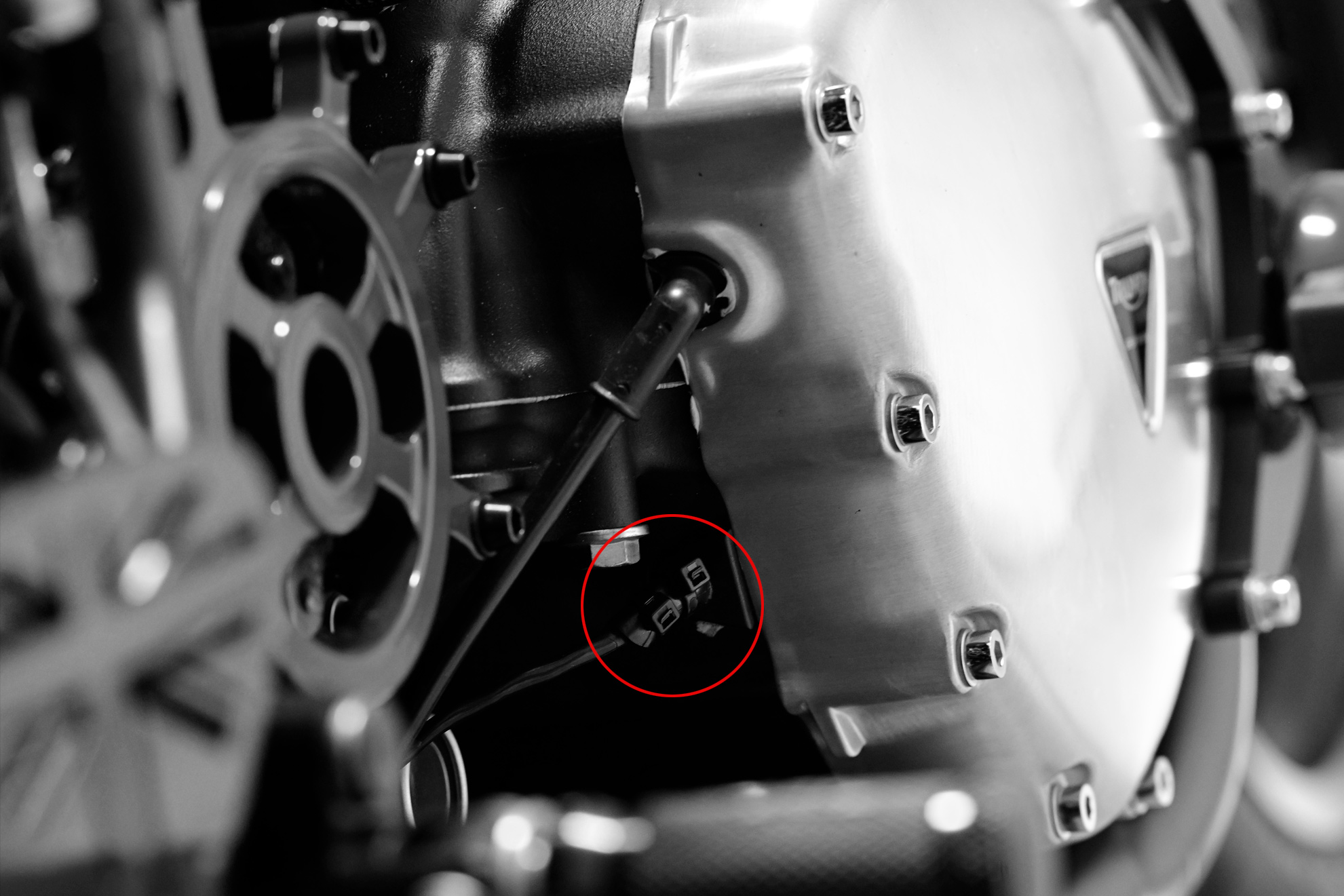
Whatever you call them — zip ties, cable ties or Zap staps — these handy fasteners again proved their worth in making small repairs, like stopping minor oil leaks where wiring exits your alternator cover. — Rahoul Ghose
MYSTERIOUS OIL LEAK
Older bikes, particularly Brit Iron classics, have always been prone to oil leaks: Worn out gaskets, old crush washers on the oil drain plug, casting faults in the engine cases … just plain age.
My EFI is not of that generation, but I still keep a rubber mat under the bike, for oil changes and just in case a leak materializes.
And an inexplicable one did rear its ugly head over time. Every morning I’d come out to the bike and find a small patch of oil underneath, if it had been sitting for a few days, larger if the bike had been run recently. It was never enough to make me worry that I was running the bike low on oil … the engine oil sight glass when the bike was up on stands (ie sitting straight up and level) always showed the oil as falling between the high and low lines.
Could it be the engine case gasket? I didn’t think so because the seams were always dry and the bolts, when checked, were always torqued down correctly.
I aways found an oily film on the top side of my 2 into 1 exhaust, but as the pipes are powder coated, I never had any issues with that greasy film burning.
The leak was literally coming from the lower of two rubber grommets on the back end of the alternator cover where ignition and alternator wires exit, I discovered.
So, it was a niggly issue, which if oil ended up on the rear tire while riding, could become a safety concern.
Here’s where Google Search becomes a home mechanic’s best friend. It brought me back to an old messageboard I had belonged to years ago on the TriumphRat.net forum, where owners of similar bikes talked about my exact issue and some solutions.
The leak was literally coming from the lower of two rubber grommets on the back end of the alternator cover where ignition and alternator wires exit, I discovered.
Interacting with members of the moto community, whether in person or online, has always been a valuable tool in the home mechanics cabinet; the solution recommended employed something I’ve frequently been told to keep in my bike toolkit as a quick fix – zip or cables ties, or as we call them North of the 49 – Zap straps.
Two Zap straps tightened around the end of the rubber grommet, I was told, would stop the oil from leaking down the tube and onto my exhaust pipes and floor.
For those with time and some extra cash in their pocket to pay out a dealer service department’s +$180 hourly fee, you’d have the grommet replaced. That’s in the official manual, I was told, as is the recommendation to use ThreeBond TB1207B Black Silicone Liquid Gasket. This is basically the same as other moto manufacturer produced products such as Hondabond, Yamabond, Suzukibond and Permatex.
They’re silicone sealants, colored black, with no acetic acid curing agent, so they’re deemed safe for sensors and gaskets.
After almost three months the leak is still, happily, non-existent. Research, research, research … and always have zip ties on hand.
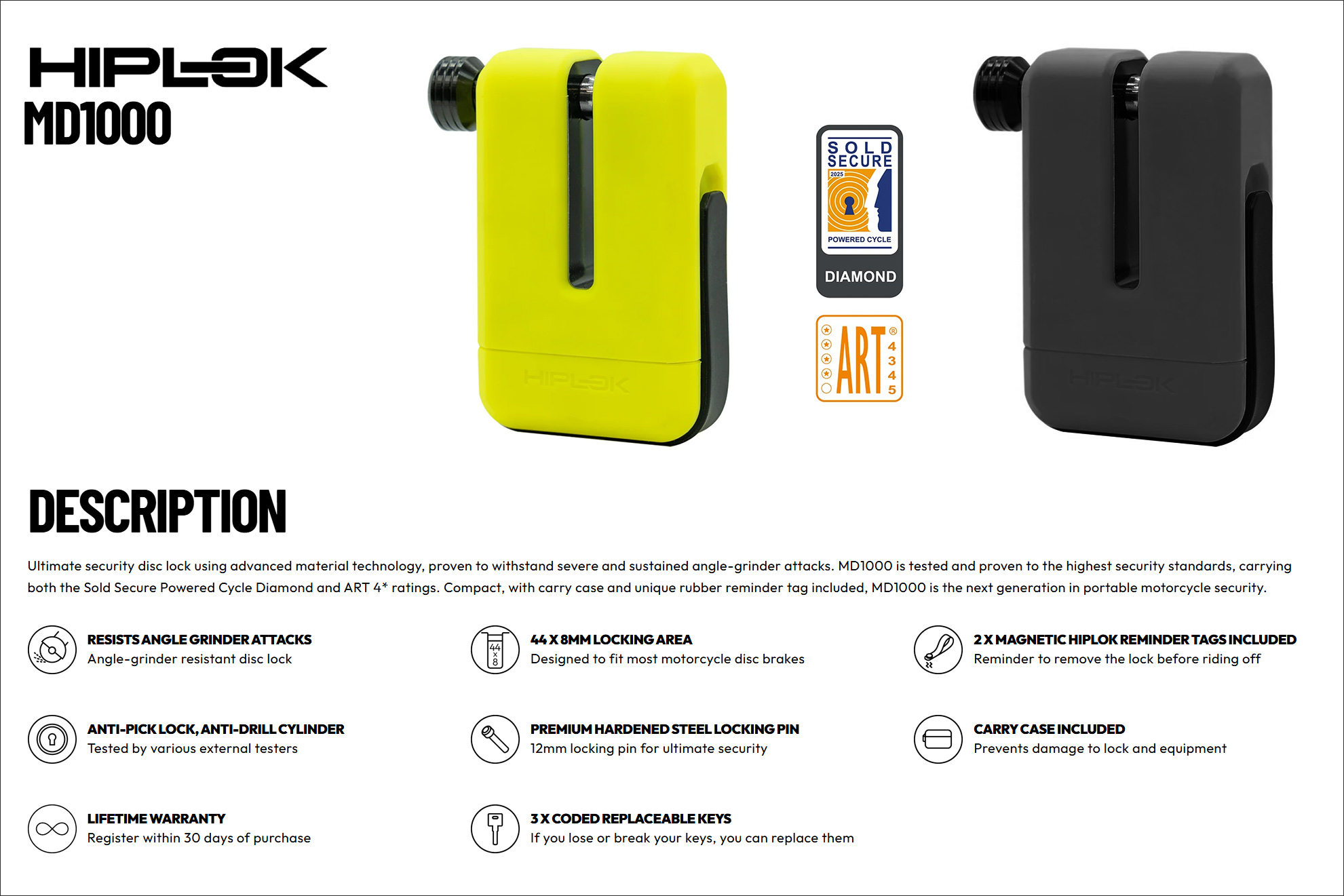
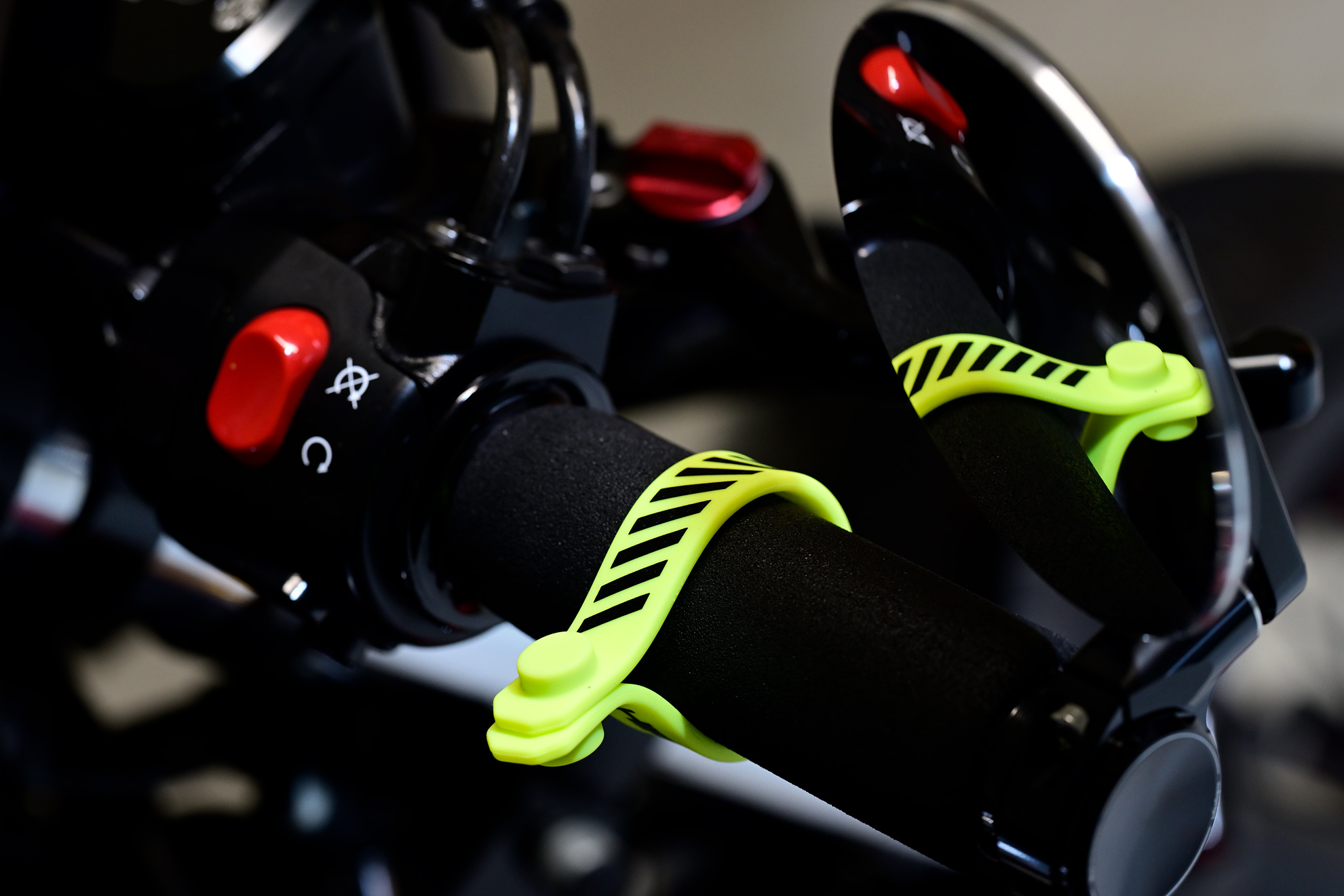
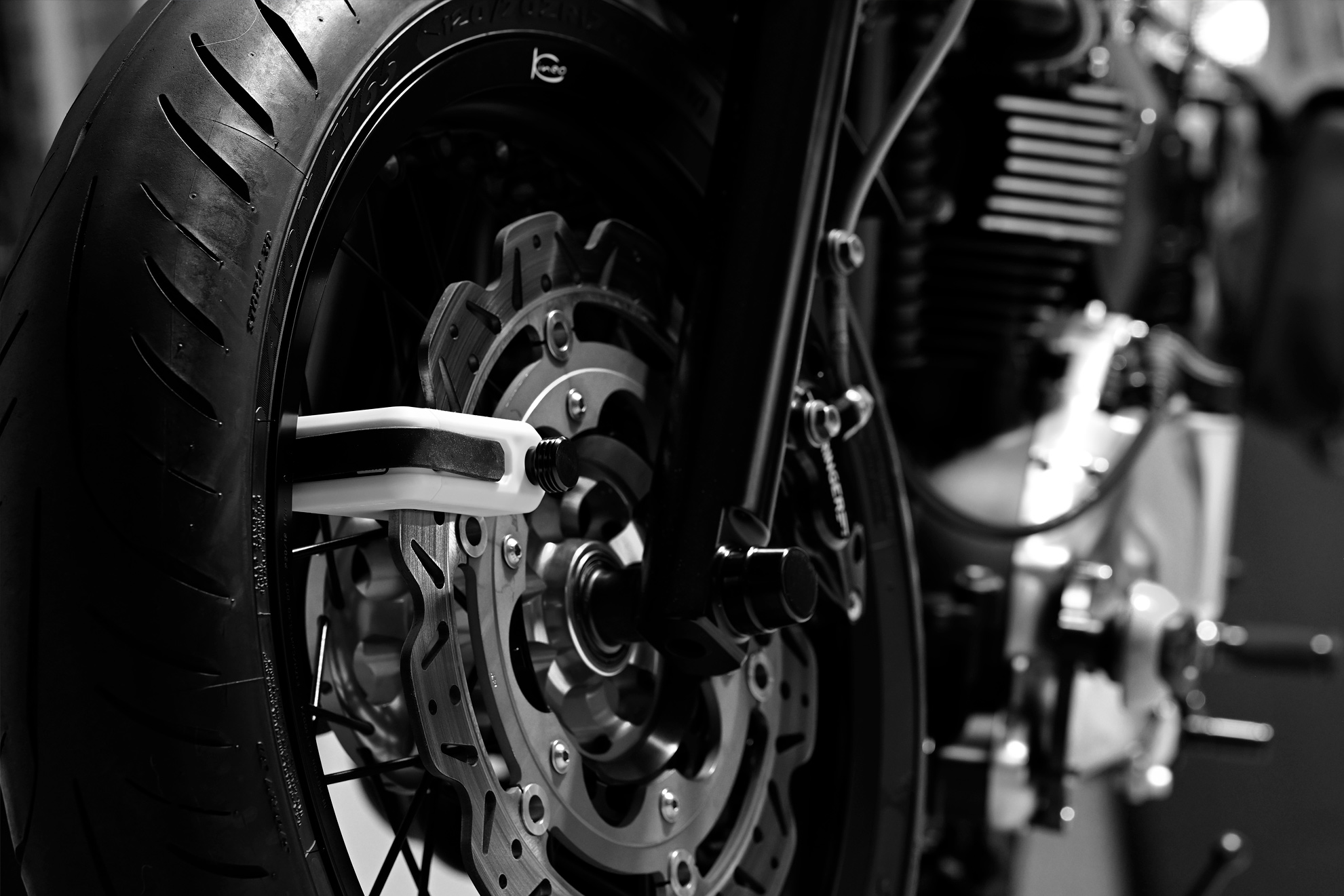
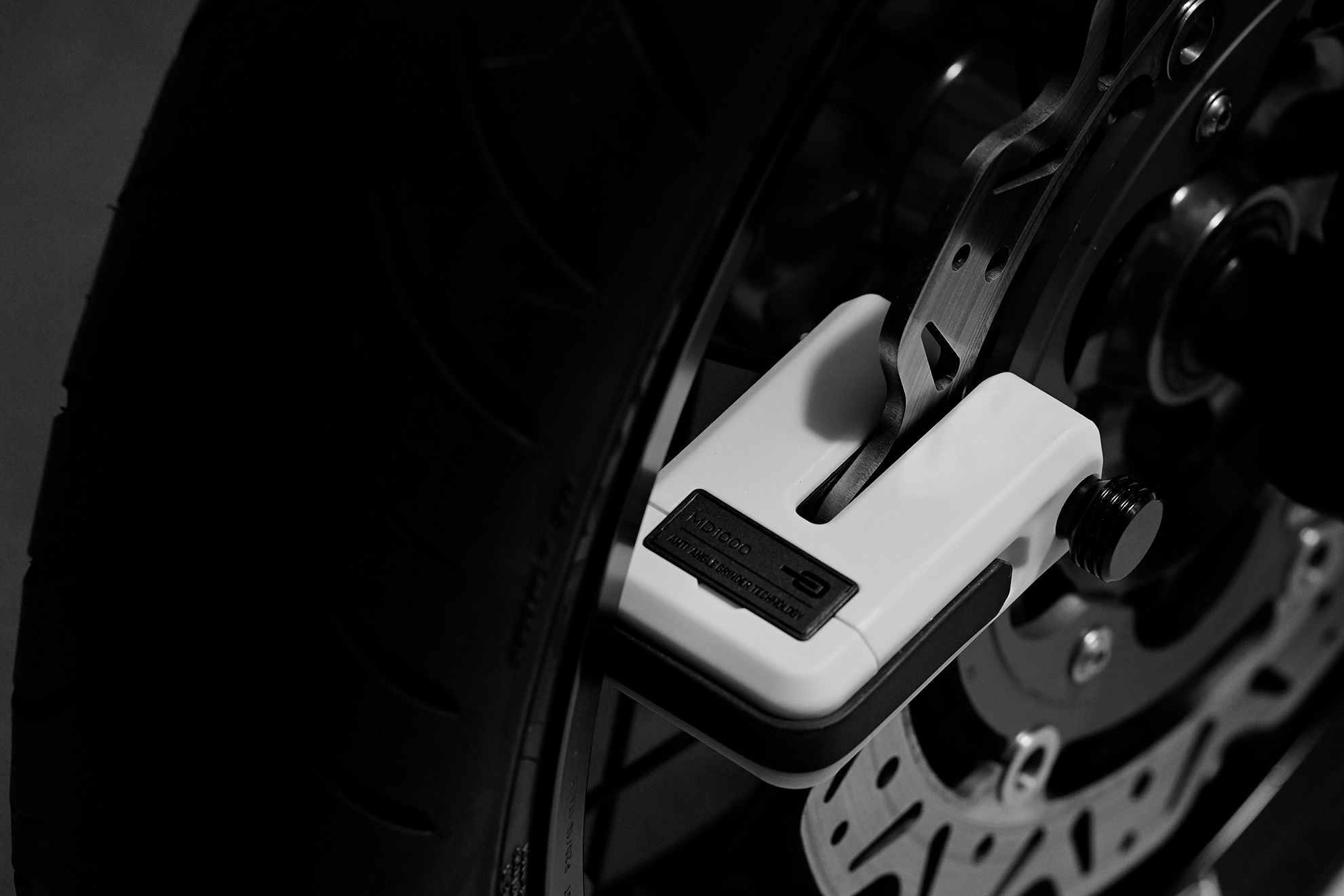
HIPLOK has produced an anti-angle grinder motorcycle disk lock offering that fits most rotors, even on rims with limited space availability. — Rahoul Ghose
LOCKING DOWN A MOTO REVIEW
Everything is cyclical in this life … and so we return to those Kineo rims … satin black with red accents, sporting road / race hybrid Avon tires. In our opinion, these are the nicest aftermarket rims you can buy, Italian made, with a manufacturing timeline of 8 to 10 weeks.
They ain’t cheap … even less so now with all the tariffs in place in the US.
But, ask our friends at A & J Cycles about them. They’re a worthy investment.
As with any aftermarket product, your choices for accompanying products become more limited … in the case of rims, your options for brake disks, calipers, sprockets, tires, and even speedo/tachs, are all are dictated by the design of the rim and hub.
So, my options in securing the bike when it’s parked outside the safe confines of my garage were, to say the least, curtailed.
As with any aftermarket product, your choices for accompanying products become more limited … in the case of rims, your options for brake disks, calipers, sprockets, tires, and even speedo/tachs, are all are dictated by the design of the rim and hub.
Over the past five years, I have not been able to find a high-end disk lock that fits my front rim and EBC Vee-Rotors Front Brake Rotor anywhere. It’s a tight fit even for a chain link cable and lock.
That search ended last week when I came across the British bicycle and motorcycle lock company HIPLOK and their MD1000 Anti-Angle Grinder Motorcycle Disk Lock.
Fits like a glove might be one way of describing the lock, which retails for $199 US. Shipping to the US was free, 3 – 6 business days, delivered vis USPS.
In addition to its design goal of thwarting thieves with angle grinders, the MD 1000 features an anti-pick lock, an anti-drill cylinder, a premium hardened steel locking pin, 3 coded and replaceable keys (when you register the product), a case, two magnet reminder tags (so you don’t accidently try to ride away with the lock still attached) … and most importantly for me … dimensions (a 44 x 8 mm locking area) which fit most motorcycle disk brakes. Once registered the lock boasts a lifetime warranty.
At a weight of just over 1 kg (2.3 lbs), build quality is excellent, with the lock utilizing a specialist composite highly resistant to motorized attack. This material literally grinds down angle grinder discs, rendering the tool useless and foiling attacks.
The lock easily fits into one of my small saddle bags on the bike, an added benefit.
You might also recognize the brand from its variety of bicycle lock offerings, which are sold in REI stores in the US.
HIGHLY RECOMMENDED: 5 / 5 stars ⭐ ⭐ ⭐ ⭐ ⭐
FINAL THOUGHTS: GET INVOLVED
As we get closer to riding season, expect more useful features on moto products and upcoming events in the Five Boroughs. Next up, we will be reviewing a new Moto community book by author Wendy Pojmann: Connected by the Street: The Myths and Realities of Motorcyclists in the USA and Italy.
If you have some tech gems you’d like to share or a product you think we should review, drop us an email at rahoul@nycmotorcyclist.com or IM us on Instagram @nyc_motorcyclist. We’re always looking for new ideas, new blood, and new contributors to serve the vibrant NYC molo community.
You can also use our Event Submission Form if you have an NYC or Tri-State event you'd like listed on our Calendar page.
Keep the Rubber Side Down and stay connected.


Catching up is great ... drop us a line